
The Mistake Most Homeowners Make First
When a garage door opener starts grinding, banging, or shaking the walls every time it runs, the first move for most people is grabbing a can of WD-40 and spraying it on anything metal. It's tempting because it's cheap, it's already sitting on a shelf in the garage, and it does quiet things down for a day or two. The problem is that WD-40 is a solvent, not a lubricant. It strips old grease off rollers and hinges, then evaporates, leaving bare metal that attracts dust and road grit faster than before. In a Shelby County winter, that grit often includes the salt and sand tracked in from icy driveways, which turns a quiet squeak into a grinding noise within a few weeks. A noisy opener is almost always a symptom of something mechanical, not a smell or a rust problem, so the fix has to be mechanical too.
What You'll Need
- Socket wrench or ratchet set
- Sturdy stepladder
- Garage door-specific lithium or silicone-based lubricant (not WD-40, not motor oil)
- Clean rags
- Flashlight
- Work gloves
Step-by-Step: Quieting a Loud Opener
Tighten every bolt and bracket. Big seasonal temperature swings between humid summers and freezing winters cause metal to expand and contract, and that constant movement works bolts loose over time. Walk the track from the opener to the door, snugging up every bracket, hinge bolt, and roller bracket with your socket wrench. Loose hardware is the single most common cause of rattling.
Lubricate the right parts, the right way. Apply garage door lubricant to the rollers, hinges, and the track-facing edge of the springs. Avoid spraying lubricant directly on the opener's drive chain or belt unless the manual calls for it. A light coat once every few months, and again after any stretch of freezing rain or road salt tracking into the garage, keeps things moving smoothly.
Inspect the rollers. Metal rollers are loud by nature and get louder as they age. Nylon rollers run quieter and hold up better through temperature swings. If yours are worn, cracked, or visibly flat on one side, they're due for replacement. Swapping a few rollers is a reasonable DIY task if the door is properly secured and the springs are not under unusual tension.
Check chain or belt tension. A chain-drive opener that slaps against the rail usually needs a tension adjustment at the opener's trolley. Check your owner's manual for the correct amount of sag, usually about a half-inch. Over-tightening strains the motor; under-tightening causes that rhythmic banging noise every time the door opens.
Add vibration isolation. Loud openers often aren't the opener itself, but the fact that it's bolted directly to the ceiling joists, transmitting every vibration through the house. Rubber isolation mounts, sold at most hardware stores, go between the opener's mounting bracket and the ceiling and cut down on transferred noise significantly.
Listen for what kind of noise you're actually hearing. A grinding or metal-on-metal sound usually points to worn bearings or spring wear. A loud bang at the start or end of the cycle often means a spring or cable issue. A steady hum with no movement means a motor or gear problem inside the opener housing. This is the point where the noise tells you whether you're still in DIY territory.
Where to Stop and Call a Technician
Some noises are a sign of wear that homeowners can safely handle. Others are a warning sign that the door or opener is under dangerous tension or mechanical stress. Call a professional if you notice any of the following:
- A loud bang or pop followed by the door refusing to open, which usually means a broken torsion or extension spring
- Visible fraying or looseness in the lift cables
- A bent or twisted track section, common after storm debris or a vehicle bump
- Grinding that continues after lubrication and tightening, which often means internal gear wear inside the opener itself
- The door running off-level or jerking partway through its cycle
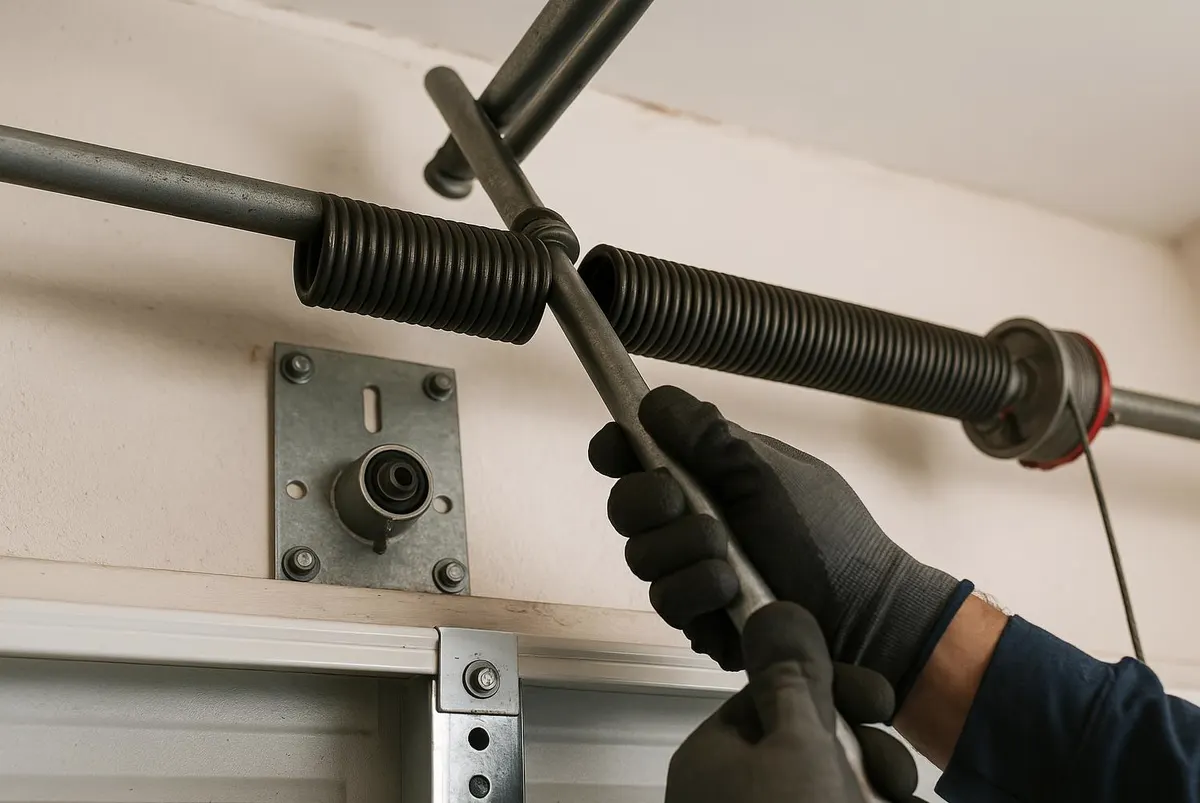
Garage door springs in particular store enough tension to cause serious injury if handled without the right tools and training. That's not a DIY repair, no matter how straightforward it looks.
When a Belt-Drive Swap Makes Sense
If you've tightened hardware, replaced rollers, adjusted tension, and added isolation mounts and the opener is still noisy, the chain-drive mechanism itself may simply be reaching the end of its useful life. Chain-drive openers are reliable but inherently louder than belt-drive models, which use a reinforced rubber belt instead of a metal chain. A belt-drive swap is a bigger job, usually involving a full opener replacement rather than a part swap, but it solves the noise problem at the source rather than managing around it. It's worth considering if your garage sits under or near a bedroom, or if the opener is more than ten to fifteen years old and showing other signs of wear like slow response time or frequent remote issues.
When to Call Houston Garage Door Service
If you've gone through these steps and the noise hasn't improved, or you've spotted a cable, spring, or track problem along the way, it's time to bring in a technician rather than push further. Houston Garage Door Service handles both Garage Door Opener Repair & Installation and Garage Door Maintenance, including full inspections that catch wear before it turns into a breakdown during a cold snap or a spring storm. We'll diagnose whether the noise is coming from hardware, the drive system, or the opener motor itself, and recommend a fix that matches the age and condition of your setup rather than a blanket replacement.
If your garage door opener in Houston, OH is driving everyone in the house up the wall, give us a call. We'll quiet it down and make sure it's ready for whatever winter throws at it next.